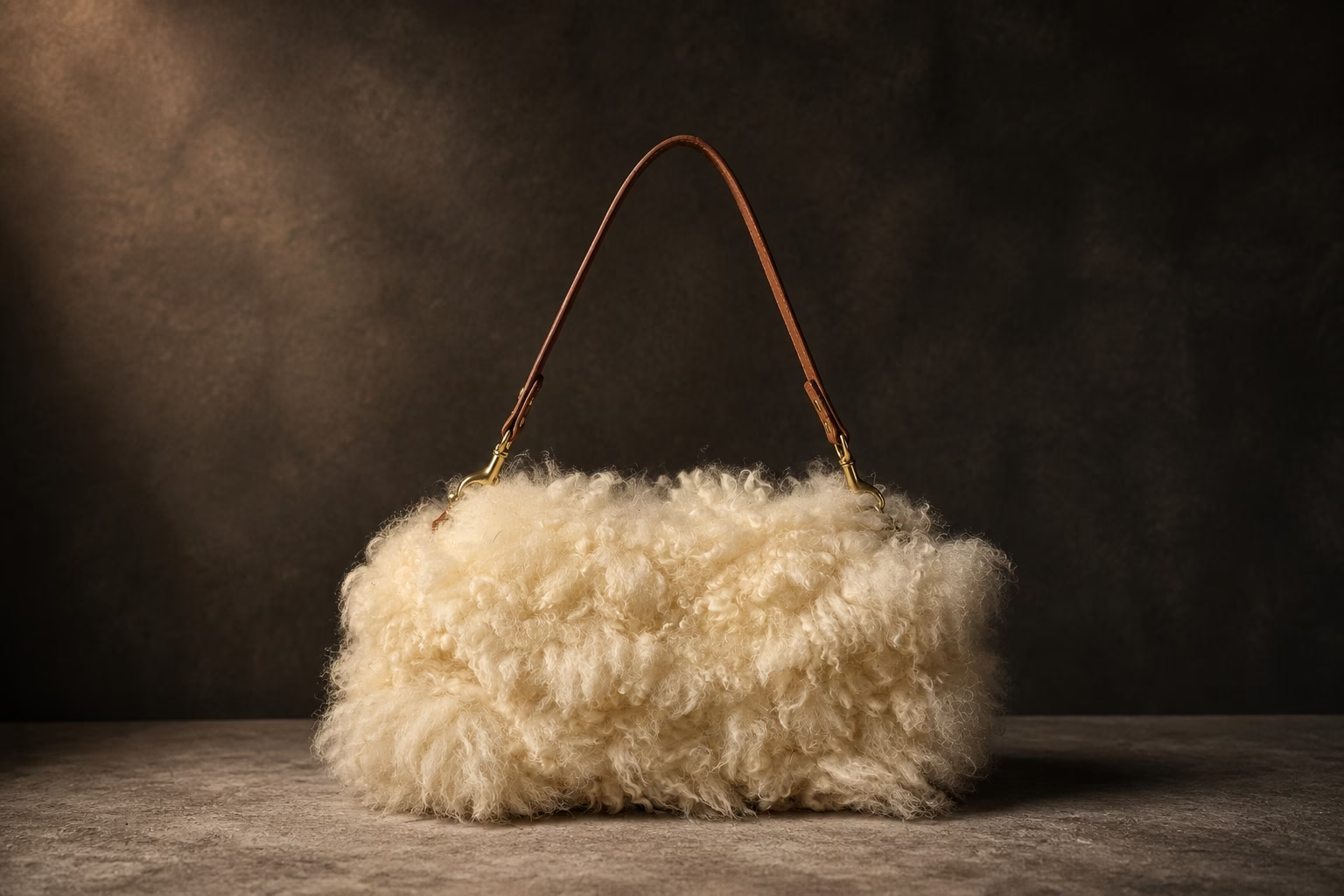
People sometimes ask me why wool. Why not paint, why not clay, why not something that holds still.
I understand the question. Wool doesn't sit politely. It shifts under your hands while you're working it. It has a memory — press it one way today and it will still be trying to go back to that shape next week if you don't felt it firmly enough to convince it otherwise. It's alive in a way that most materials people call "raw" simply aren't. You are not sculpting wool so much as negotiating with it.
That negotiation is exactly why I can't seem to leave it.
I came to textiles honestly — through a family that made things with their hands long before I did, and then through a textile degree that gave me the vocabulary for what I'd already been drawn to instinctively. But it took years of moving through other materials, other techniques, before I understood that wool wasn't just one medium among several I'd learned. It was the one that kept calling me back.
Every other material I've worked with has a moment where it becomes "finished" and stops changing. Wool never quite does that. Even after it's felted, spun, woven, or shaped into something as structured as a bag, it holds a kind of quiet motion — it still breathes, still shifts slightly with humidity and handling, still carries the animal it came from. When I'm wet-felting a piece, I can feel the moment the fibers stop being separate and start becoming one thing, and that moment is never entirely under my control. I can guide it. I can't force it early. The fleece decides when it's ready to lock together, and my job is to notice that moment and not miss it.
That's the part I think people rush through, if they think about wool at all — they see the finished object and assume it was always going to look that way. It wasn't. Every piece could have gone a dozen different directions depending on how the fiber responded that day, how much moisture was in the air, how the fleece itself was crimped and structured before I ever touched it. Two identical amounts of Romney fleece, handled the same way, will still felt slightly differently. That's not a flaw in the process. That's the whole reason I do this.
Working across wet-felting, handspinning, handweaving, needle-felting, and garment construction has taught me that wool isn't one material so much as a family of possibilities depending on how you ask it to behave. Spun, it becomes structure and drape. Felted, it becomes density and form. Woven, it becomes rhythm. Needle-felted, it becomes precision and detail. I move between these techniques not because I'm restless, but because wool itself seems to want to be approached differently depending on what it's being asked to become.
I've come to think of my practice as a collaboration with nature rather than a use of it. The sheep grew this fiber for their own reasons, long before it ever had anything to do with me. My work is to listen to what it already is — its crimp, its loft, its natural color — and shape something with it rather than over it. That's different from working with a material that has no opinion of its own. Wool has an opinion. Alpaca fleece has a different one. Even fleece from the same animal changes season to season. You cannot approach any of it carelessly and expect it to cooperate.
So when people ask why wool, the honest answer is that it never lets me get lazy. It asks for attention every single time, no matter how many years I've been doing this. It rewards patience and punishes shortcuts, gently but unmistakably. In a life that moves as fast as most of ours do, there's something I need about a material that simply will not be rushed.
That, I think, is the real answer.
Wool became my medium because it continues to teach me. Every fleece asks something different of me, and after all these years, I still find myself listening.
~ Karen